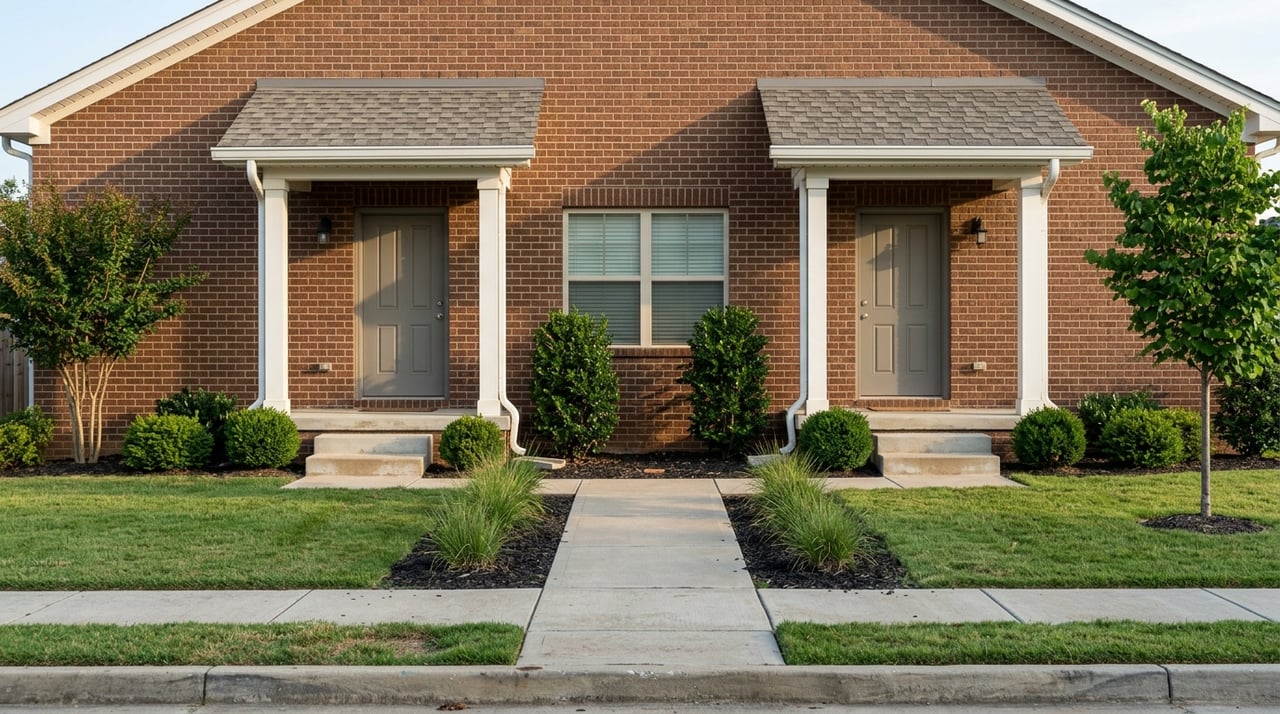
Investing In Broken Arrow: Starter Guide To Small Rentals
May 7, 2026
May 7, 2026
Thinking about buying your first rental in Broken Arrow? You are not alone, and you are smart to start with the numbers before you start touring properties. In a market like Broken Arrow, small-rental investing can work, but the best deals usually come from careful buying, steady expectations, and a clear plan for zoning, rent, and repairs. Let’s dive in.
Broken Arrow gives you a mix that many first-time investors like: a large suburban market, a strong owner-occupied base, and rent levels that can still support long-term rental demand. Census QuickFacts reports a 2024 population of 122,756, owner occupancy of 72.0%, median household income of $86,765, and median gross rent of $1,320.
That owner-heavy profile matters. It suggests Broken Arrow is not an oversupplied rental market where you should expect easy wins from rapid rent growth alone. Instead, it looks more like a stable buy-and-hold market where your purchase price, operating costs, and tenant-ready condition matter most.
For a starting point, it helps to think in ranges instead of chasing one perfect market number. Zillow's May 2026 rental data shows an average rent of $1,850 across all property types, with average rents around $1,280 for 2-bedroom units and $1,863 for 3-bedroom units.
On the purchase side, Zillow places the typical home value at $286,846 and the median sale price at $275,333, while Redfin reports a median sale price of $304,000. For small rentals, current asking prices shown on listing portals run much higher than some buyers expect, with duplex and triplex examples roughly from $300,000 to $330,000, and some premium properties reaching about $715,000.
If you are a first-time investor, the key takeaway is simple: Broken Arrow may reward disciplined buying, not loose underwriting. Based on the current rent benchmarks in the research, a property bought around a $300,000 basis may produce only a modest gross yield before expenses.
Using the 2-bedroom rent benchmark, a $300,000 acquisition basis works out to roughly a 5.1% gross yield before vacancy, taxes, insurance, repairs, and management. Using the 3-bedroom rent benchmark, that same basis comes closer to 7.5% gross yield before expenses. That is a big difference, which is why unit mix and actual rent roll matter so much.
No rental market is full all the time, and your plan should not assume perfect occupancy. Northmarq's Q1 2026 Oklahoma multifamily report says the Tulsa South/Broken Arrow submarket led new demand, with vacancy at 4.8% and rent growth generally ranging from about 2.0% to 3.5% since 2022.
Colliers also reported 95.8% occupancy in Tulsa multifamily in Q3 2025, with construction slowing for the seventh straight quarter. That points to a market that is still leasing, but not one where you should expect aggressive rent jumps to fix a weak deal.
For context, the U.S. Census Bureau reported a national rental vacancy rate of 7.2% in Q4 2025. Broken Arrow and the broader Tulsa area appear tighter than that national benchmark, which supports the case for steady demand. Still, it is best to build normal vacancy and turnover into your math from day one.
If you are just getting started, small rentals usually mean looking at duplexes, triplexes, fourplexes, or single-family homes rented on long-term leases. In Broken Arrow, you need to pay close attention to zoning before assuming a parcel can be used the way you want.
The city zoning ordinance includes RD, or Residential Duplex, and RM, or Residential Multi-Family, districts. The RM district is intended to accommodate multifamily units such as apartments and condominiums, and the ordinance points you to later chapters for allowed uses and dimensional standards.
That means you should check each property individually, not just rely on how it has been marketed online. If a property is not already zoned for your intended use, the city's review process can become a major part of your timeline and risk.
Broken Arrow notes that specific use permits go through planning commission and city council review. So if you are considering a duplex, fourplex, or another nonstandard setup, you want to confirm parcel-level zoning before you write an offer or move past inspections.
This is especially important for buyers who are trying to create value through a use change. A property that looks like a bargain can become much more expensive if the existing zoning does not support your plan.
Short-term rental plans need even more caution. The city's permitting page lists a short-term rental zoning-clearance permit and a short-term rental license, so you should treat that as a separate path, not something automatically allowed under standard residential rental use.
A beginner investor can avoid a lot of stress by asking the right questions early. In Broken Arrow, these are some of the most important ones:
These questions help you see the real cost of ownership, not just the list price. A property that looks affordable upfront may be much harder to manage if utilities are shared, deferred maintenance is heavy, or the current lease terms do not match your plan.
If you are buying an occupied property, lease review belongs on your must-do list. Oklahoma Title 41 says 30 days' written notice is required to terminate a tenancy at will or a period-to-period tenancy of three months or less, and the state's landlord-tenant guide highlights the same rule.
That is one reason you do not want to assume you can make changes right after closing. If your plan depends on adjusting rents, ending a short-term lease arrangement, or doing major repairs, you need to know exactly what the current lease allows and what notice rules apply.
Not every small rental in Broken Arrow is priced for beginner investors. The research shows active asking prices for small multifamily properties ranging from roughly $300,000 to $715,000, with premium infill assets in places like the Rose District trading at very different numbers.
That spread matters. Based on the current 3-bedroom rent benchmark, a $715,000 duplex would only support roughly a 3.1% gross yield before expenses, unless there is stronger rent upside or another clear reason for the higher price.
For most first-time investors, that means it is wise to separate "good-looking property" from "good rental math." A polished location or updated finish may still be a poor fit if the income does not support the basis.
If you want a simple way to approach Broken Arrow small-rental investing, keep your plan focused. A steady, long-term rental strategy is easier to underwrite than one built on best-case rent growth or a future use change.
A practical starter strategy may look like this:
This kind of approach may not feel flashy, but it is often what protects a first-time investor from buying a property that only works on paper.
When you are investing in a market like Broken Arrow, speed matters, but clarity matters more. You want someone who can help you sort through asking prices, spot red flags in listing details, and keep your decision grounded in how the property actually performs.
That is especially helpful if you are comparing a standard resale property with other affordable ownership paths or trying to balance rental goals with a long-term budget. A hands-on local agent can help you focus on what fits your numbers, your timeline, and your comfort level as a first-time investor.
Broken Arrow can be a solid place to start small-rental investing, but the opportunity is in buying right, not hoping the market will rescue a weak deal. If you want practical guidance as you compare options, connect with Ericka Sumo for responsive, straightforward help.
Stay up to date on the latest real estate trends.
Etiam non quam lacus suspendisse faucibus interdum. Orci ac auctor augue mauris augue neque. Bibendum at varius vel pharetra. Viverra orci sagittis eu volutpat.